The Danger of Online Predators

The Danger of Online Predators

The Safeguarding Board for Northern Ireland (SBNI) and the Police Service of Northern Ireland (PSNI) have developed creative visual assets to educate young people and their parents and carers about online risks and reporting pathways, in accordance with Northern Ireland Executive’s Online Safety Strategy.

The campaign focuses on the following areas:

  1. Online predators and the issue of grooming
  2. Risks around young people and sharing images online
  3. Raising awareness of the dangers online

Online perpetrators use social media channels to make contact with victims and exert pressure to achieve their aims. Therefore, we want to use social media to reach our target audiences with key prevention messaging. This will enable us to reach the relevant people and build data which we can compare against crime reports to see how well the campaign messaging works.
Victim Support

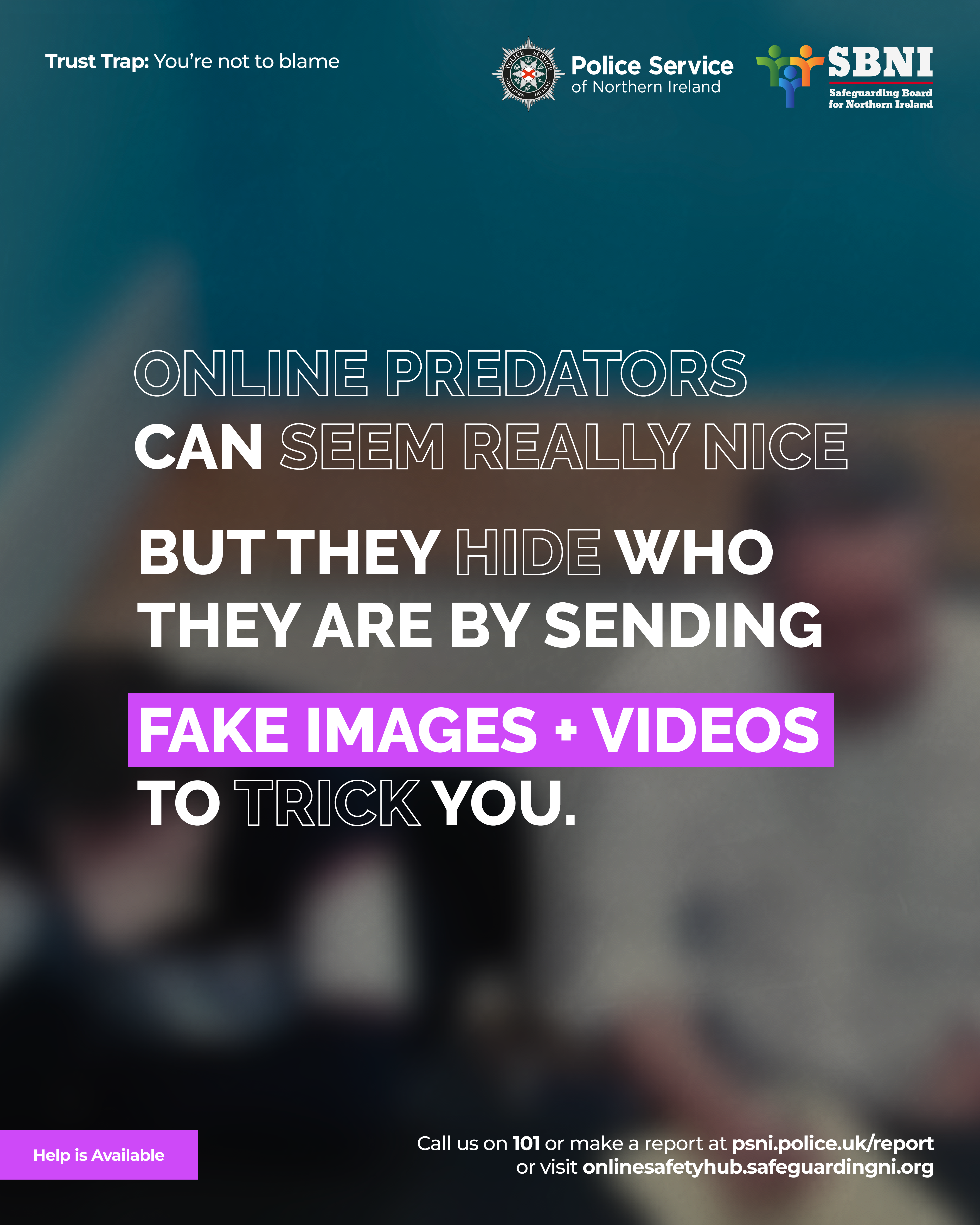
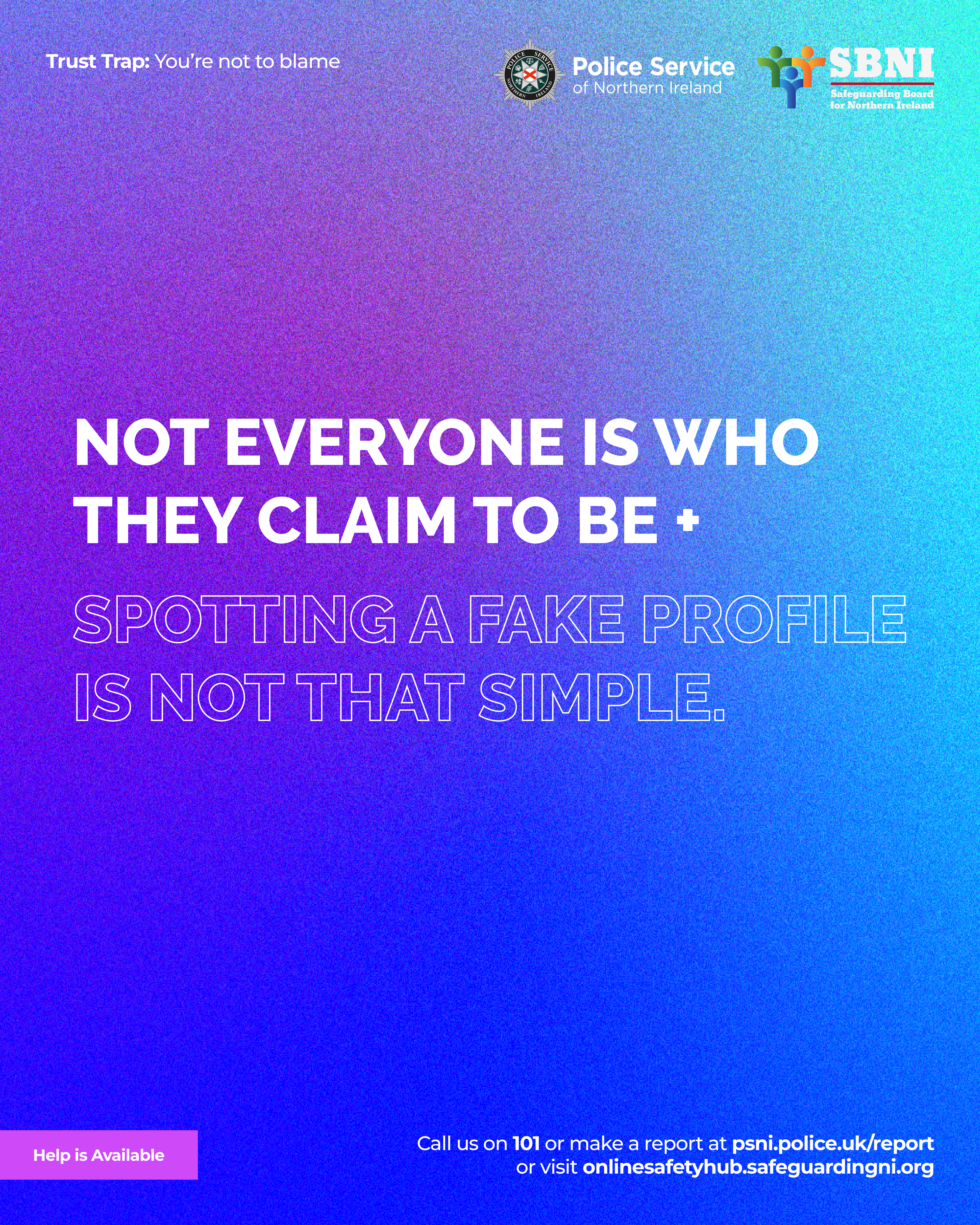
  • Online predators can seem really nice but they hide who they are by sending fake images and videos to trick you.
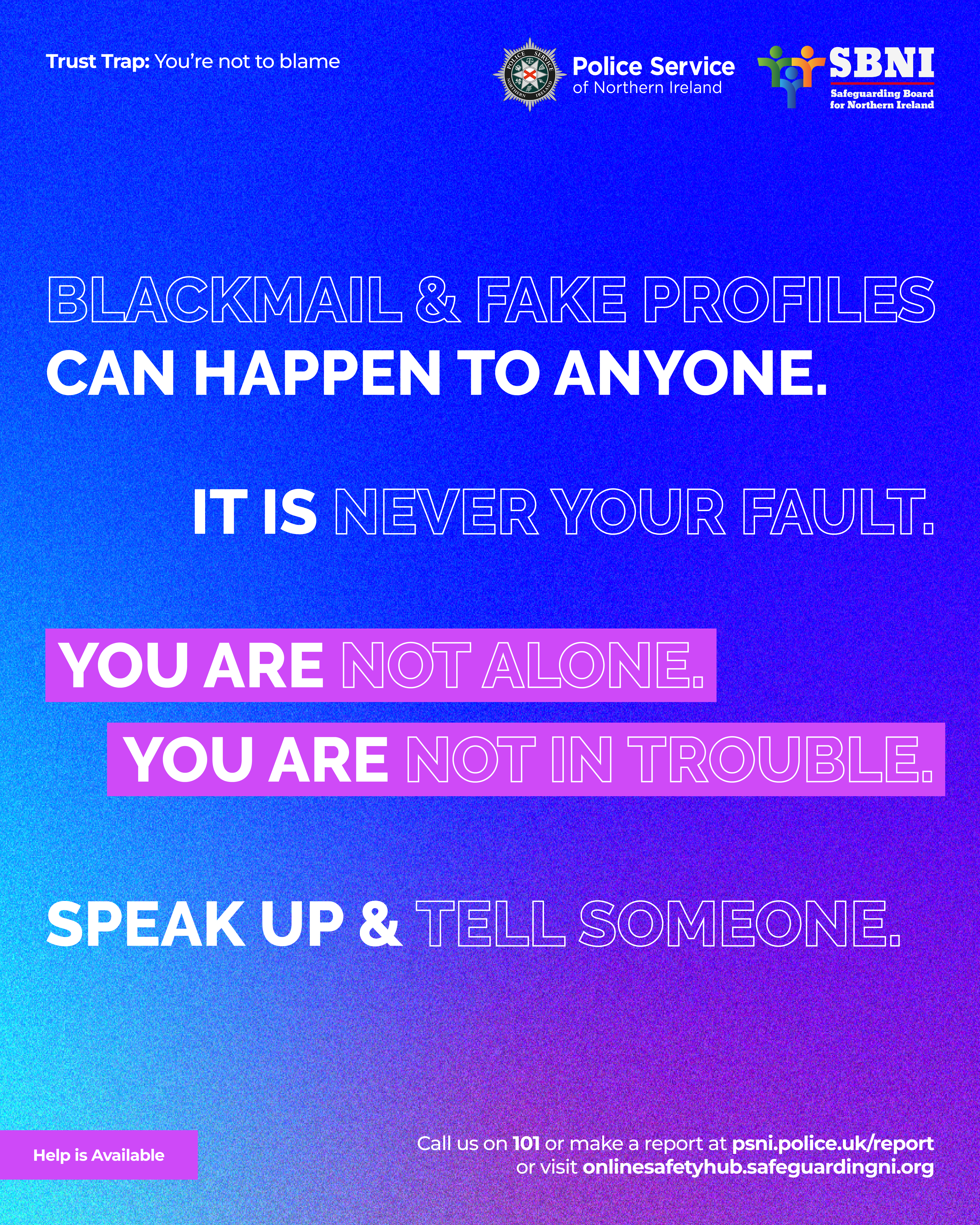
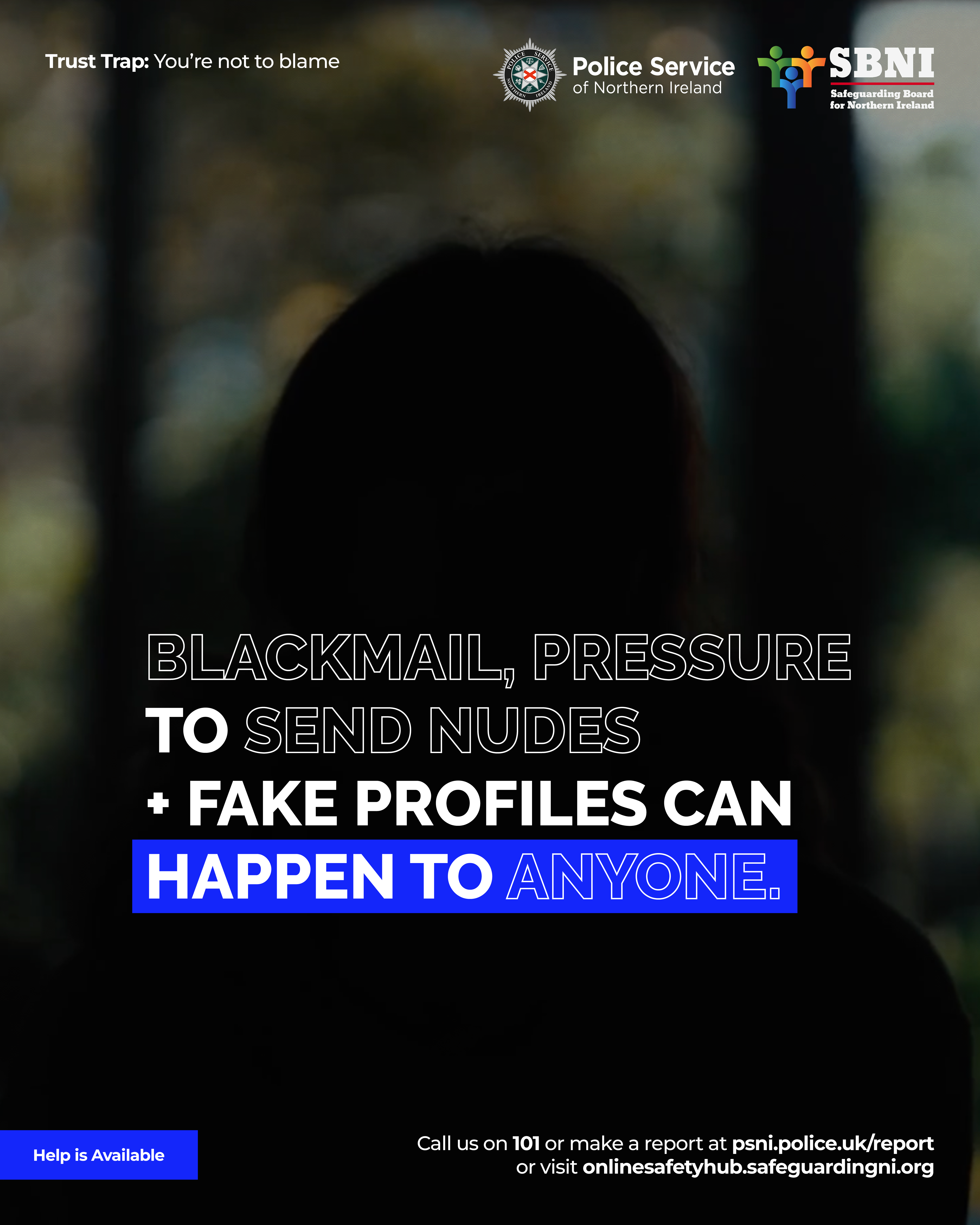
  • Blackmail, pressure to send nudes and fake profiles can happen to anyone. It is never your fault. You are not alone. You are not in trouble. Speak up and tell someone.
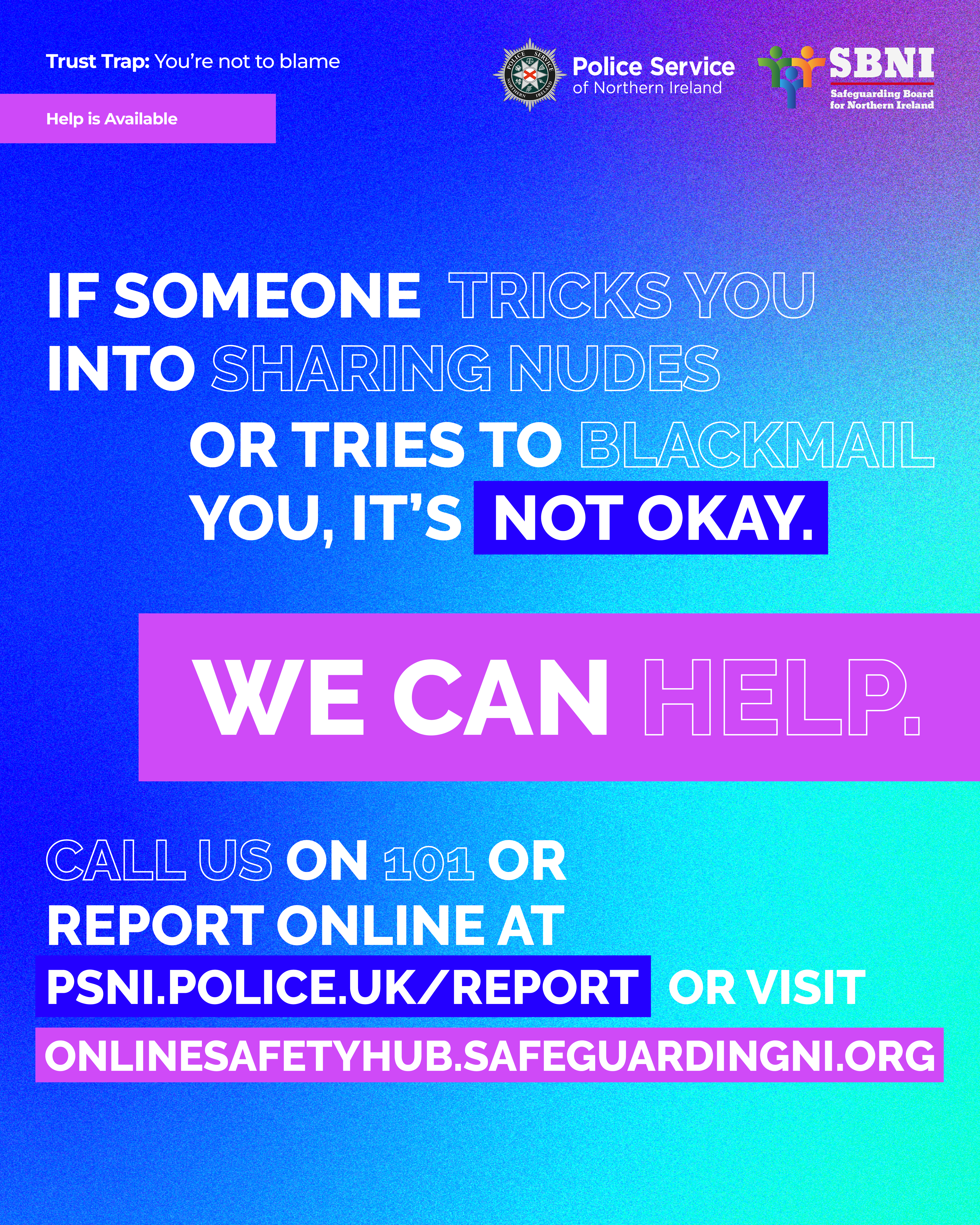
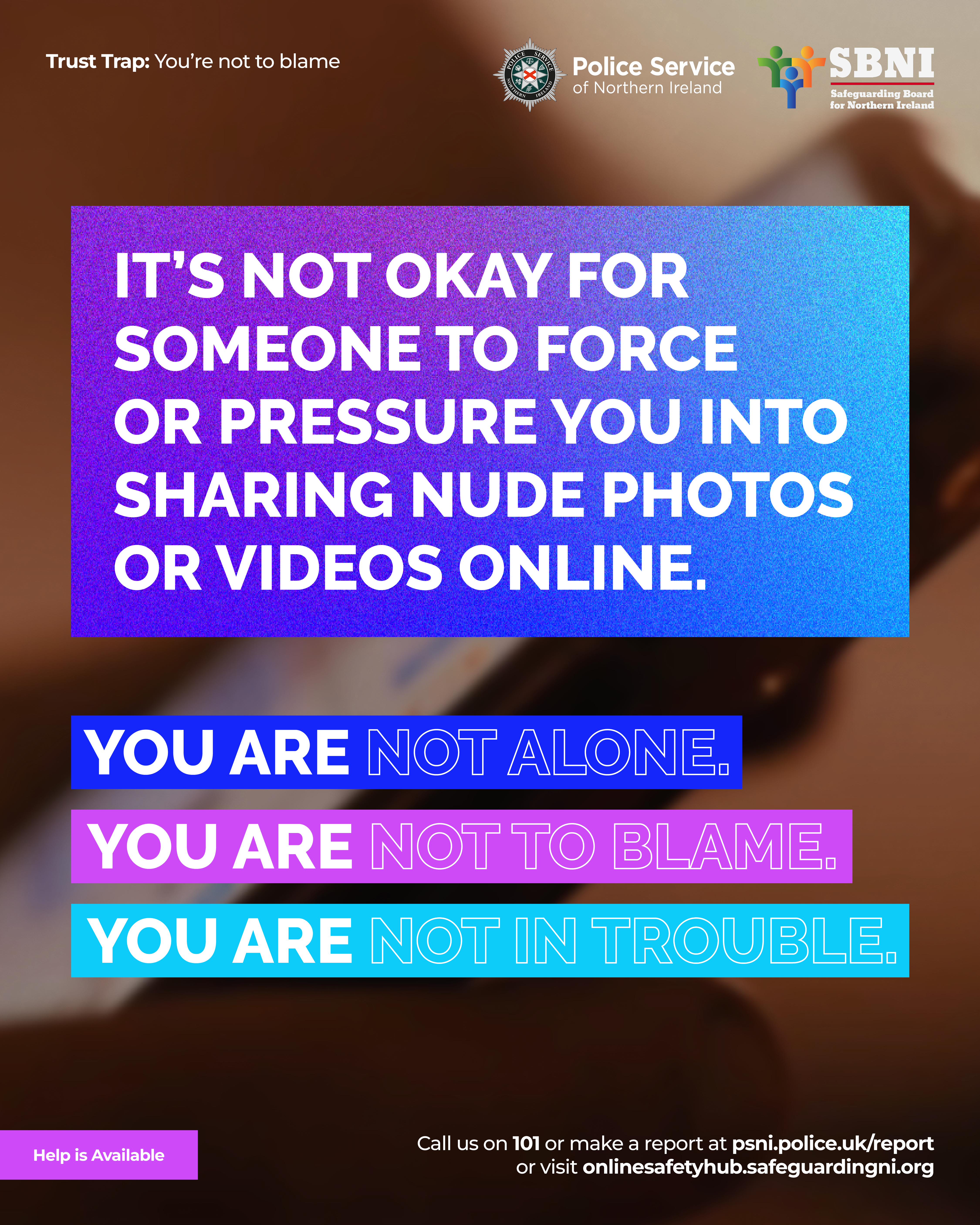
  • It’s not okay for someone to force or pressure you into sharing nude photos or videos online.
  • Predators can create fake online profiles and trick you into sharing nudes. It can happen to anyone and it’s never your fault.
  • Children who are targeted online often stay silent and not tell anyone. Whatever’s happening, you don’t have to cope with it alone.

Parents and Carers

  • You may think your child would be able to spot an online predator, but the truth is that they are incredibly manipulative and convincing.
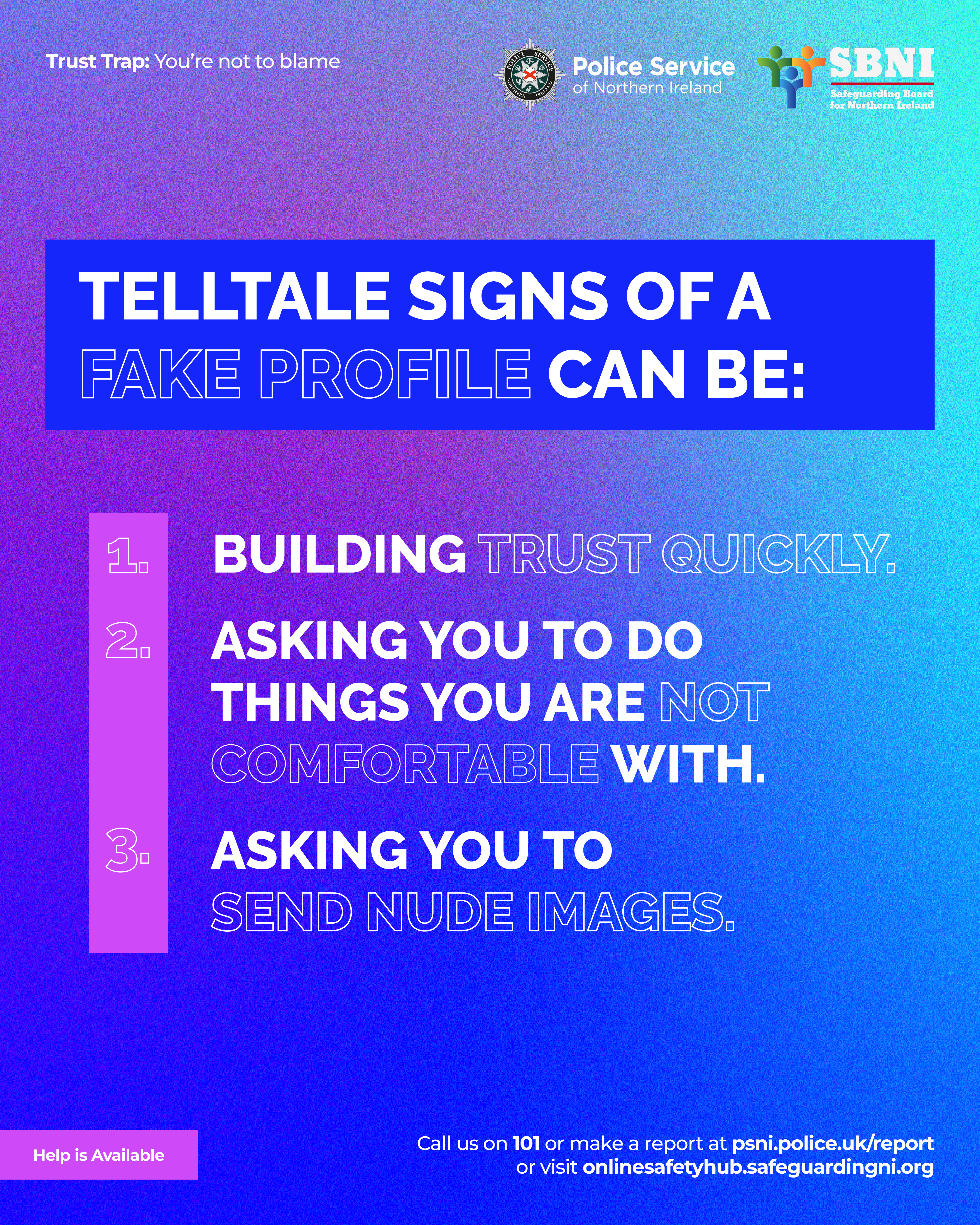
  • Online groomers may hide who they are by sending photos or videos of other people. They will share common interests, give gifts, and say all the right things to win their trust. It’s not easy for a young person to tell if someone is genuine or not

Awareness

Visit the online safety section of our website to learn more about sextortion, online grooming and risks associated with sending nude images.

Action

If you are a victim, Police can help. Call us on 101 or report online.

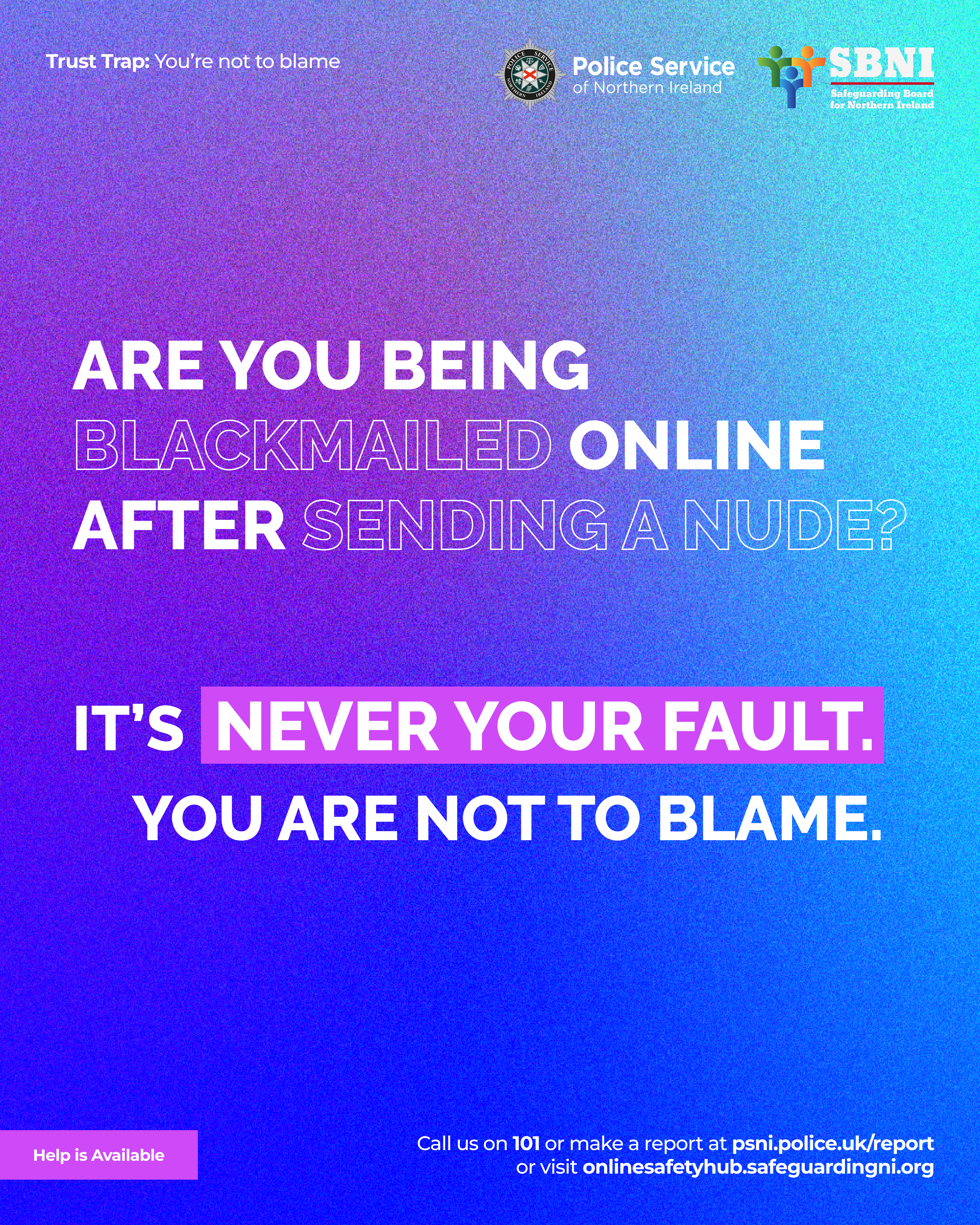
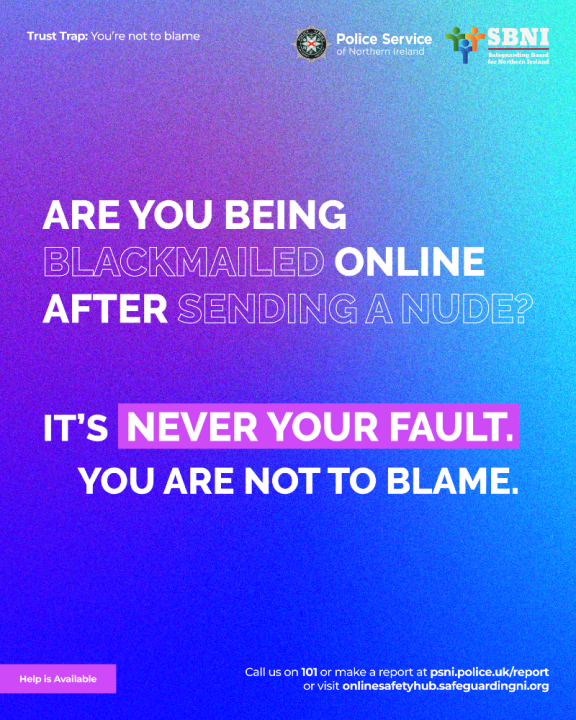
Trust Trap: You’re not to blame.  Are you being blackmailed online after sending a nude?  It is never your fault. You are not to blame.  Help is available. Call us on 101 or make a report at psni.police.uk/report or visit onlinesafetyhub.safeguardingni.org
Trust Trap: You’re not to blame. Are you being blackmailed online after sending a nude? It is never your fault. You are not to blame. Help is available. Call us on 101 or make a report at psni.police.uk/report or visit onlinesafetyhub.safeguardingni.org

Victim Support

  • Online predators can seem really nice but they hide who they are by sending fake images and videos to trick you.
  • Blackmail, pressure to send nudes and fake profiles can happen to anyone. It is never your fault. You are not alone. You are not in trouble. Speak up and tell someone.
  • It’s not okay for someone to force or pressure you into sharing nude photos or videos online.
  • Predators can create fake online profiles and trick you into sharing nudes. It can happen to anyone and it’s never your fault.
  • Children who are targeted online often stay silent and not tell anyone. Whatever’s happening, you don’t have to cope with it alone.
Online Safety Hub Logo

Further Support and Advice

Developed by the Safeguarding Board for Northern Ireland (SBNI), the Online Safety Hub is a dedicated website for young people and adults, focusing on Online Safety.

Whether it’s information about sharing images, social media, screen time or knowing where to turn to when something doesn’t feel right - the Hub has free and accessible advice to help young people and families feel more safe, secure and supported online.

Visit the online safety hub website